HVAC/Plumbing · Colorado Springs, CO ·
Which AC Add-Ons Actually Cut Summer Cooling Costs in Colorado Springs Homes?
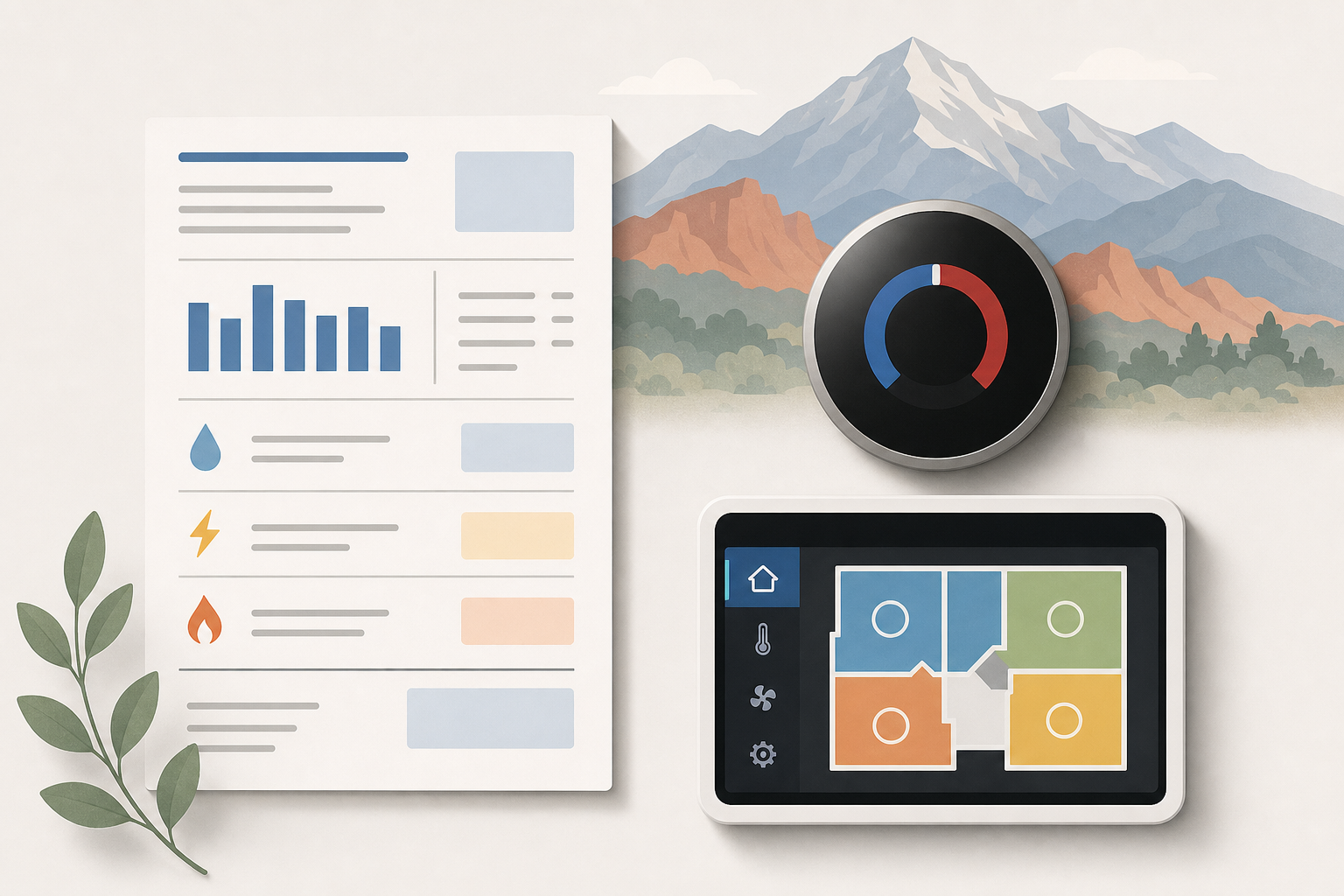
Smart thermostats, zoning controls, and variable-speed air handlers can all help lower cooling costs, but they deliver different results. Smart thermostats usually save the most when your schedule is inconsistent, zoning helps larger or multi-level homes stop overcooling unused rooms, and variable-speed air handlers can improve efficiency and comfort on older or newer systems that need better airflow control. The best choice depends on your current equipment, ductwork, and how much your home’s temperature changes during summer.
I tell homeowners this all the time: don’t buy the shiny upgrade until you know what your system is doing wrong. If the house gets too warm upstairs every afternoon, zoning may be worth every penny. If the family leaves at different times and nobody wants to babysit the thermostat, a smart thermostat is usually the easiest win. If the equipment is older but still solid, a variable-speed air handler can smooth out the rough edges, but only if the ductwork isn’t fighting you. The goal is simple — spend once, and spend on the problem that’s actually costing you money.
Colorado Springs homeowners know the pattern: the first real heat wave arrives, the AC runs longer than expected, and the electric bill jumps before the month is over. That’s where the right upgrades matter. The best AC add-ons for lower energy bills are the ones that reduce run time, improve control, or let an older system operate more efficiently without jumping straight to a full replacement.
Smart thermostats, zoning controls, and variable-speed air handlers can all help lower cooling costs, but they deliver different results. Smart thermostats usually save the most when your schedule is inconsistent, zoning helps larger or multi-level homes stop overcooling unused rooms, and variable-speed air handlers can improve efficiency and comfort on older or newer systems that need better airflow control. The best choice depends on your current equipment, ductwork, and how much your home’s temperature changes during summer.
Not every add-on saves money in the same way. In Colorado Springs, dry air and big day-to-night temperature swings create a cooling pattern that rewards smarter runtime control more than brute-force cooling. That means the highest-value upgrades are usually the ones that help the system cycle less often, cool more evenly, and avoid wasting energy on rooms nobody is using.
Here’s the simple comparison:
If you’re evaluating AC add-ons for lower energy bills, start with the upgrade’s job, not the marketing name. A smart thermostat manages timing. Zoning manages where cooling goes. A variable-speed air handler manages how hard the system works. Those are different levers, and the savings potential is different too.
In practical terms, smart thermostats are often the fastest payback because the installation is relatively simple and the savings are tied to behavior. Zoning can be more valuable in a home with obvious hot-and-cold differences, but it only makes sense if the duct layout and equipment can support it. Variable-speed air handlers usually cost more up front, yet they can be a strong choice when the current system is oversized, noisy, or constantly short-cycling.
Myth: The most expensive add-on always saves the most money.
Reality: The best savings come from the upgrade that fixes your specific waste pattern. A $300 thermostat can beat a bigger hardware upgrade if your main issue is wasted runtime, while a zoning project can outperform both in a home where one upstairs bedroom drives the whole system.
One of the most expensive mistakes homeowners make is buying an add-on that sounds efficient but doesn’t match the existing equipment. Older systems often have more room for improvement because they rely on basic on/off operation and less precise airflow control. Newer systems may already be efficient enough that the wrong add-on brings little benefit unless the home has a control or duct problem.
For older AC systems, the best AC add-ons for lower energy bills are often:
For newer systems, the decision is narrower. If the unit already has good efficiency and stable operation, you usually get better value from a control upgrade or a targeted airflow fix than from piling on features that do not change how often the equipment runs. If the house has leaky ducts, poor return air, or an oversized unit, the add-on should address that issue first.
A thermostat cannot fix a system that is struggling to move air. If ducts are leaking, returns are undersized, or the unit is already short-cycling, the homeowner may see little savings from a new control. The smarter move is to match the add-on to the actual bottleneck so the upgrade has a real job to do.
Colorado Springs is not a heavy-humidity climate, and that changes the math. Cooling here is often about removing heat without overworking the system, not fighting sticky moisture day after day. That makes control-based upgrades especially useful because the system can spend less time running at full blast and more time maintaining steady comfort.
Local elevation also affects performance. At higher altitude, equipment behavior, airflow, and combustion-adjacent system design can all become more sensitive to setup quality. On top of that, Colorado Springs sees sharp temperature swings between hot afternoons and cooler evenings, which means systems that cycle efficiently can take better advantage of the overnight temperature drop.
In Colorado Springs, a home in Briargate may fight afternoon sun on an upstairs level, while a property closer to Old Colorado City may have older duct layouts that make zoning or airflow changes more noticeable. During July and August, those big swings between hot afternoons and cool nights make targeted cooling upgrades more useful than blanket “efficiency” features that don’t match the house.
That climate profile is why AC add-ons for lower energy bills should be chosen with local conditions in mind. A smart thermostat helps most when you can use nighttime setbacks without sacrificing comfort. Zoning helps most when different areas of the home heat unevenly during sunny afternoons. Variable-speed operation helps most when the goal is steadier, lower-power cooling during long dry days.
There is no universal winner, but there is a smart fit for each situation.
If your system is older and still functioning: start with a smart thermostat if the equipment is compatible. It is usually the lowest-cost way to cut waste. If the home has obvious hot spots, consider zoning next. If the system is noisy, uneven, or always cycling on and off, ask whether a variable-speed air handler would improve comfort enough to justify the investment.
If your system is newer: do not assume another gadget will create major savings. The biggest gains usually come from improving control or correcting a distribution issue. If the system already runs efficiently, zoning or a thermostat may be enough. If the home still feels uneven, the issue may be duct design, not the cooling equipment itself.
If you own a larger home or multi-level property: zoning is often the most practical upgrade because it matches cooling output to actual demand. That can reduce the common problem of freezing the main floor just to keep the second floor livable.
If your goal is comfort and efficiency before replacement: a variable-speed air handler can be the most future-proof choice, but only if the system is compatible and the existing ductwork can support it. It is less of a quick fix and more of a measured upgrade.
"The cheapest upgrade is not always the smartest one. The right one is the one that stops the waste your home actually has."
Good add-ons are only good if they are installed and configured correctly. Smart thermostats can be straightforward, but they still need proper wiring and system setup. Zoning controls are more involved because they require dampers, control logic, and careful balancing so one room does not steal airflow from another. Variable-speed air handlers are the most technical of the three and should be matched to the equipment, airflow requirements, and existing ducts.
That means installation time, labor cost, and compatibility checks matter as much as the equipment itself. In some homes, the right answer is a modest add-on. In others, the best path is a targeted upgrade now and a replacement later. The point is to avoid paying for features that don’t produce measurable savings.
A reputable HVAC evaluation should answer three questions before any work begins:
I tell homeowners this all the time: don’t buy the shiny upgrade until you know what your system is doing wrong. If the house gets too warm upstairs every afternoon, zoning may be worth every penny. If the family leaves at different times and nobody wants to babysit the thermostat, a smart thermostat is usually the easiest win. If the equipment is older but still solid, a variable-speed air handler can smooth out the rough edges, but only if the ductwork isn’t fighting you. The goal is simple — spend once, and spend on the problem that’s actually costing you money.
What types of AC add-ons can help lower my energy bills? The most effective options are smart thermostats, zoning controls, and variable-speed air handlers. They help in different ways: scheduling, room-by-room cooling, and better airflow control. Which one saves the most depends on your home’s layout and your current system.
Are smart thermostats worth it in Colorado Springs? Yes, often. They are usually the easiest and most affordable way to reduce wasted runtime, especially if your schedule changes or you tend to keep the same temperature all day. They work best when the existing AC system is otherwise in decent shape.
Is zoning only for big homes? No, but it is most useful in homes with uneven temperatures, such as two-story layouts, additions, or sunny rooms that overheat. A smaller home can still benefit if one area consistently drives the cooling demand.
Do newer AC systems need add-ons? Sometimes, but only when there is a control or airflow problem. Newer systems may already be efficient enough that the wrong add-on adds cost without meaningful savings. Compatibility and house layout matter more than age alone.
What should I check before choosing an add-on? Look at your current utility bills, temperature imbalances in the house, duct condition, and whether the system short-cycles or runs constantly. Those clues usually point to the upgrade that will actually lower costs.
If your summer bills keep climbing, targeted upgrades can often buy you time before a full replacement becomes necessary. The right evaluation can show whether a smart thermostat, zoning control, or variable-speed air handler will make a real difference in your home. For Colorado Springs homeowners comparing AC add-ons for lower energy bills, that kind of straight answer matters more than a sales pitch.
Summit Comfort Heating & Air helps homeowners choose practical AC upgrades that improve efficiency without overspending on features they do not need. If you want a clear recommendation based on your current system, schedule an assessment and see whether a targeted add-on can cut your summer cooling costs before replacement becomes the next step. Comfort you can count on.
Schedule an upgrade assessment